
From Nuclear Reactor to Acting Stage: How the Navy Made Me the Actor I Am Today
Eight years operating nuclear reactors, a life-changing lesson from a ship's captain, a Vietnam Marine vet who grabbed me by the collar — here's how I went from the engine room of a warship to scene study at the Beverly Hills Playhouse.

Roberto Montesinos
Let Me Tell You How I Got Here
Seven years in a nuclear engine room taught me more about acting than any class I've ever taken.
I just didn't know it yet.
If you'd told me as a young sailor standing watch in the engine room of a nuclear-powered warship that I'd one day be doing scene study at the Beverly Hills Playhouse — and loving every second of it — I'd have laughed. But here I am. And the more I reflect on it, the more I realize those eight years in the US Navy's Nuclear Power Propulsion Program didn't just prepare me for acting. In a lot of ways, they made me the actor and collaborator I am today.
Pull up a chair. I'll start at the beginning.
The Making of an ELT
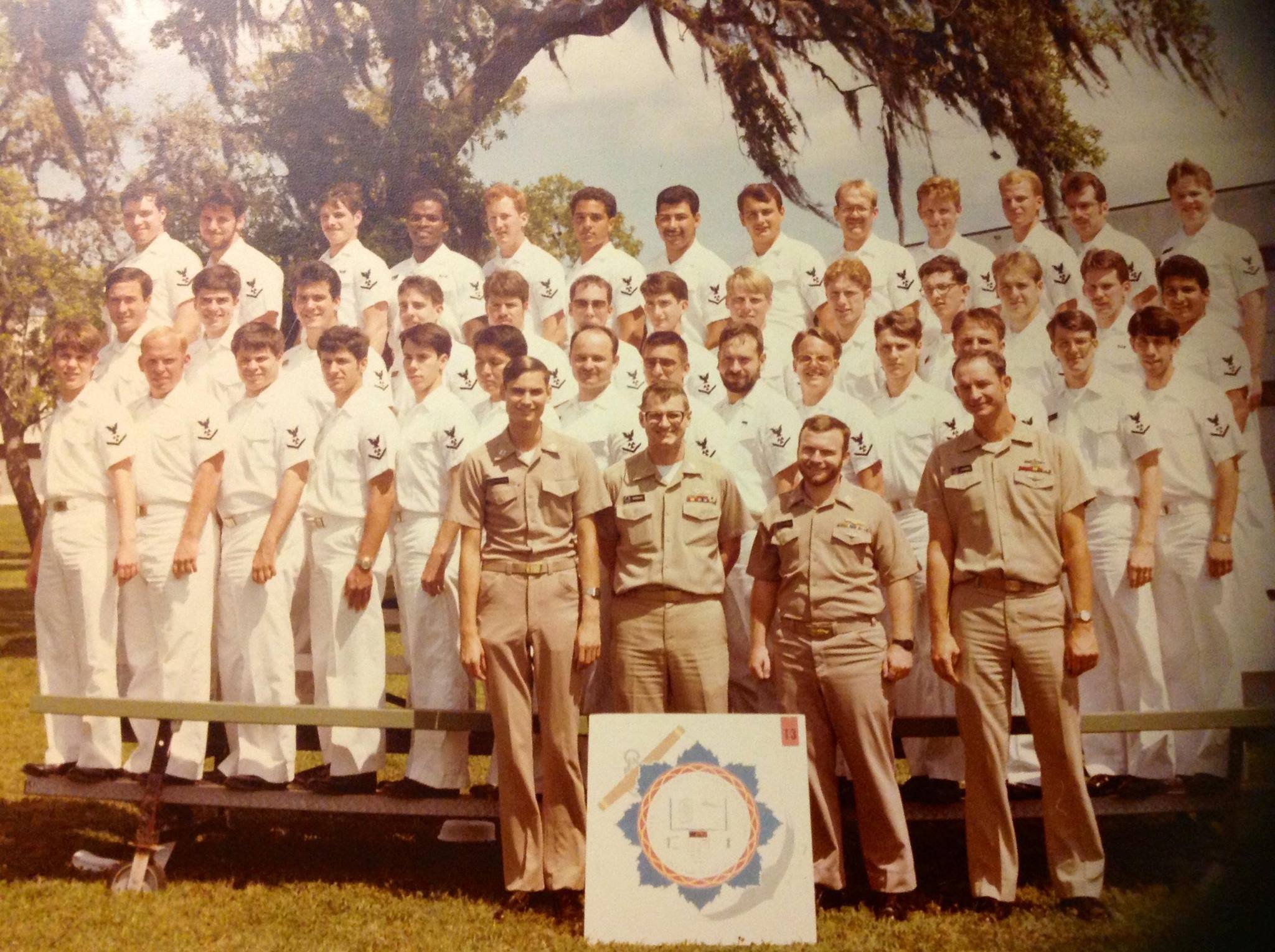
My entry into the Navy's nuclear world started with Machinist's Mate "A" School — the fundamentals of naval mechanical systems. That was the appetizer. The main course was Nuclear Power School (NPS) in Orlando, FL: six months of physics, thermodynamics, and reactor theory (I believe the courses were designed by MIT) that hit like a firehose. Think of it as a master's degree in nuclear engineering, compressed into half a year, with no option to tap out.
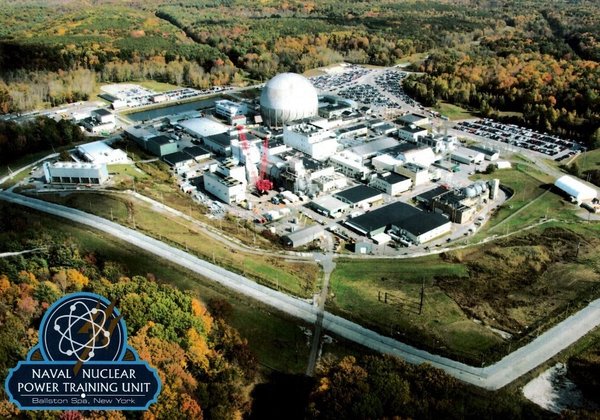
From there, it was on to the Nuclear Prototype Training Unit (NPTU) at the S7G reactor in Balston Spa, NY — where theory finally met a real, operational nuclear reactor. That's where things got serious in the best possible way. And that's also where I got an unexpected opportunity.
Only the top Mechanical Operator students at NPTU were invited to attend Engineering Laboratory Technician (ELT) School — an additional three-month program specializing in the chemistry and radiological controls of nuclear reactors. I was selected. As an ELT, I was responsible for monitoring reactor coolant chemistry, managing radiological safety, and maintaining a comprehensive understanding of the plant's mechanical systems. In plain English: if something was wrong with the water or the radiation levels in that reactor, it was on the ELT Team to catch it and fix it.
When I completed ELT training, instead of shipping out to a warship, I was offered a 26-month assignment as an ELT Junior Staff Instructor back at the prototype. This put me in an unusual position — I was technically an instructor, but I hadn't yet served at sea, unlike most of the senior staff who had years on nuclear submarines, cruisers, and aircraft carriers. So they used us "Pickups" as assistants, which meant I got a front-row education from people who had actually done the thing. I helped qualify hundreds of sailors across every reactor plant role. I learned how to explain complicated systems clearly, read a room, adapt on the fly, and absorb lessons from people far more experienced than me.
Sound familiar? It should. That's basically acting school.

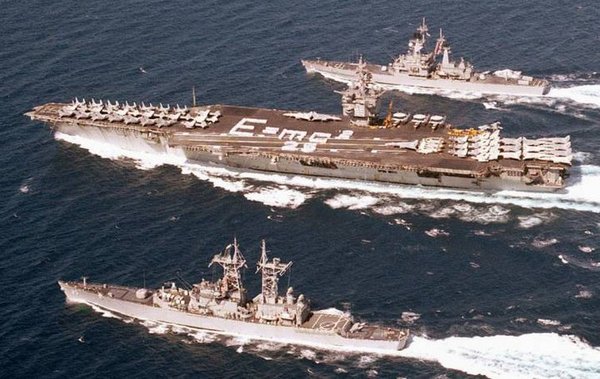
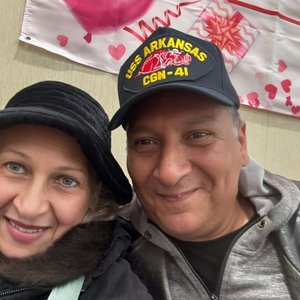
Welcome Aboard the USS Arkansas CGN-41
After my instructor assignment, I was sent to join my first warship — the USS Arkansas (CGN-41), the last nuclear-powered guided missile cruiser ever built by the United States. Getting there was an adventure before I even set foot on deck. I flew from the Philippines to Diego Garcia, landed on the aircraft carrier USS Enterprise off the coast of Madagascar, and was lowered by helicopter to the Arkansas flight deck because new Tomahawk missile additions blocked a direct landing.
When I got below decks, nine former students from my prototype days were there to greet me. It was an unexpectedly warm welcome, and it set the tone for what the Navy's nuclear community is really like — people who look out for each other, because the work demands it.
Even as a qualified ELT Instructor, I still had to re-qualify on the Arkansas to stand watch in those engine rooms. As an ELT I was given nine months to qualify to stand watch. I did it in five weeks.
Leveraging my instructor experience, I qualified fast enough to be placed on one of the six watch teams preparing for the upcoming Pentagon reactor safety inspections. I'd been part of such teams twice before as an instructor, and I knew how they worked. I was confident, and I made that known — perhaps boldly — to my Chief Engineer.
Daily Drills, and Why I Loved Them
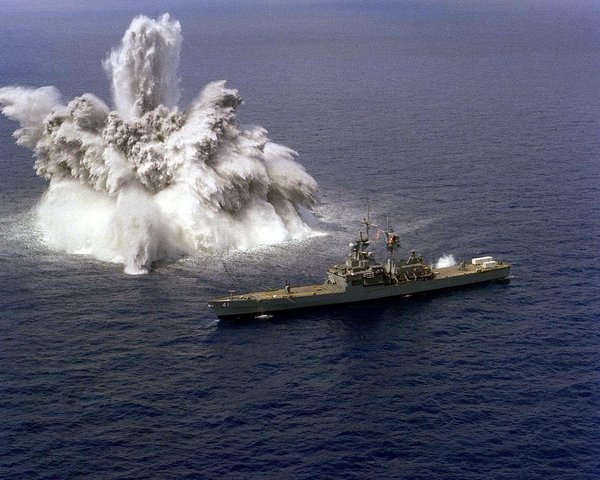
Every day at sea, the Reactor Training Division ran propulsion plant drills. We're not talking about paperwork exercises. These were full-scale emergency simulations: failing pumps, electrical panel explosions, radioactive leaks. Then it escalated — missile and torpedo strikes, fires, steam leaks, flooding, multiple simultaneous equipment failures. We drilled medical evacuations. We drilled everything.
And I genuinely loved it.
There's something about working as an integrated team under pressure — each person knowing their role, executing procedures from memory, calling out status updates while chaos is unfolding around you — that is deeply satisfying. We weren't just memorizing steps; we were building trust. Every drill tightened the team. When something went wrong for real, you knew exactly who to rely on.
Years later, sitting in acting class working a scene with a partner, I kept finding echoes of those drills. Breaking down a scene, understanding what your character wants, staying present with your scene partner, trusting that the other person is going to show up — it's not so different. The discipline, the rapid recall, the teamwork. The Navy trained me for it without ever mentioning the word "acting."
Perfect Scores and a Promotion Nobody Expected
During our upcoming yearly Pentagon inspection, I predicted to the Chief Engineer that I'd be the ELT chosen for observation during a key evolution: sampling and analyzing the reactor plant's water. As the newest ELT on a watch team, I figured I'd be under the microscope. I was right.
A Navy Captain (O6 rank) observed me first. Perfect score — no faults noted. Then the inspection team's Admiral wanted to observe me sample the reactor coolant again. Another perfect score.
The Chief Engineer called me into his office, genuinely puzzled. How was the newest guy on the team pulling perfect samples? I explained my approach: while most ELTs had a "reader" guide them through the lengthy, time-sensitive procedural steps, i.e. more than 80, I had memorized every step and stated them aloud to the reader for confirmation instead of the other way around. It was unconventional. It worked twice at MARF.
He immediately assigned me to begin the qualification process for Leading Engineering Laboratory Technician — a senior qualification that typically takes two to three years aboard a ship to even be considered for. I was offered it after seven months.
That qualification required interviews with several senior officers, including the Commanding Officer of the Arkansas.
The Lesson That Changed Everything: Crew Morale
Qualifying for Leading Engineering Laboratory Technician required formal interviews with multiple senior officers, culminating in a sit-down with the Commanding Officer of the Arkansas himself. I had perfect scores on the Pentagon inspection and the fastest ELT qualification in the ship's recent history. I walked into that office confident — and came out carrying something I had not expected.
And what he valued most wasn't technical precision, though that mattered enormously. It wasn't the perfect scores on the Pentagon inspection. Before he signed my qualification card, he leaned in and told me something I've carried with me ever since.
Nothing on that billion-dollar warship was more important than crew morale.
Not rank. Not hierarchy. Not the chain of command. The collective feeling and atmosphere of the crew — all hands, regardless of rating — was the most critical factor in the performance and well-being of the ship. He asked if he could count on me to help with it.
"Absolutely, Captain."
I kept my word. I started by making a commitment to say hello to every single person I passed on the ship. Every person, every time. One day at sea, I counted over two hundred hellos before I stopped counting. That simple act — genuinely acknowledging another human being — changed my attitude, my days, and honestly, my understanding of what it means to be part of a team.
My final three years on the Arkansas were the best of my naval career. The work was still hard. Sea days are long. But the atmosphere was different, and I was a big part of why. Thank you, Captain Twardy. That was the most valuable lesson I've ever received from another human being. I am grateful for it every single day I walk onto a set.
(For anyone curious about the Arkansas herself, here's a beautiful history of the ship put together by former shipmate EM2 Allen Kraft, who was there the night I stood my very first watch.)
What the Navy Actually Taught Me
I didn't realize until years later that the nuclear program had been training me for acting the whole time. The parallel is exact:
Rapid recall under pressure. An ELT doesn't consult a manual mid-evolution. You know your procedures cold before you touch the equipment. On set, you know your lines cold before the director calls action. The muscle is identical — memorization under pressure, executed precisely, while staying present with what's happening around you.
Team trust in drill conditions. The reason our drills worked was that every person knew their role and trusted everyone else to know theirs. A scene with a great partner feels the same way: you stop performing and start reacting, because you trust the other person is going to show up. That trust is built the same way in both rooms — through repetition, preparation, and showing up consistently.
Crew morale as a mission-critical variable. Captain Twardy didn't teach me that morale was a nice-to-have. He taught me it was the most important factor on the entire ship. Every production set has a morale too — and it shapes everything from performance quality to how the day feels at wrap. I learned I could influence it, and I took that responsibility seriously.
Adapting explanations to the audience. As an ELT Instructor, I taught the same reactor systems to hundreds of sailors with wildly different backgrounds. Some were engineers. Some had never held a wrench. The content didn't change — my communication did. Acting is the same skill applied differently: reading the room, finding what your partner needs, adjusting in real time.
The Navy didn't train me to be an actor. But it trained me to be exactly the kind of professional that thrives on a set.
After the Navy: Wandering, Then a Letter
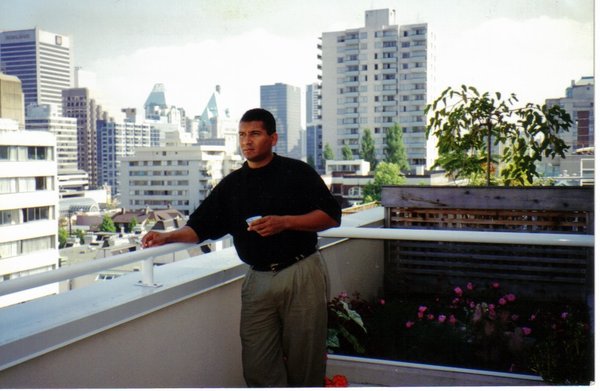
Leaving the structured world of nuclear propulsion was a bigger transition than I expected. For a few years, I wandered through a string of jobs — custom marble and granite work, life insurance sales, outside sales for a printing company, a music publishing company, an internet startup where I dove deep into software development. The pay was often better. None of it came close to the feeling of being in that engine room with a team I trusted.
Then one day, a letter arrived asking for a donation to fund an $8,000 short film. My sales instincts kicked in immediately, and I called the person. One conversation led to another, and within two weeks I had pulled together donations, graphic design services, post-production deals — things the writer-director had been trying to line up for six months.
He looked at me and said, "How did you do that?"
I didn't even think about it: "When something broke in the engine room, you called your friends and fixed it as fast as possible. Period."
He said, "You should be a producer."
I said, "What's a producer?"
And that was that. My internet startup got acquired, I moved to Los Angeles, and I started interning for producers, learning everything I could about the film industry. Along the way, I received one piece of advice that kept coming up: to truly understand filmmaking, I needed to understand story and character. The best way to do that? Take a strong acting class. I was referred to the Beverly Hills Playhouse.
Scene Study Felt Like Coming Home
I went to the Beverly Hills Playhouse to learn about storytelling for producers and screenwriters. I was not there to become an actor. I want to be very clear about that, because what happened next was entirely someone else's doing.
Training at the Playhouse felt strangely familiar. The rigor, the immersive commitment, the expectation of total preparation — it reminded me of Nuclear Power School and the prototype. But the substance was entirely different. Every scene was a creative challenge. Every character was a unique exploration. I watched half a dozen different actors do the same scene from A Streetcar Named Desire over the course of a year, and each one was completely distinct. The same dialogue, the same blocking — yet every combination of actors produced something new. Some performances were extraordinary. Some were less so. But all of them were alive in a way that machinery never quite is.
I was fascinated.
The Man Who Grabbed My Collar
One day, after I'd reworked a "repeat" scene from All About Eve based on our teacher's notes, I found myself literally pinned against the wall.
Allen Williams — Vietnam Marine Veteran, four Purple Hearts from the Battle of Khe Sanh, experienced boxer, ballet dancer, killer actor, and one of the greatest acting teachers I've ever encountered — had grabbed my collar.
"Why aren't you auditioning for my play?!"
I tried to explain. I wasn't an actor. I was here to learn about producing and screenwriting—
"Bullshit!! I just watched your scene!! You were terrific!! You made your notes your own!!"
"I don't audition!! I've never auditioned in my life!!", I said.
"I don't care. I'm directing 'Balm in Gilead.' It takes place in Manhattan. I need Puerto Ricans!!"
I should mention: I'm Colombian American. He cast me anyway. As a Puerto Rican named Ernesto. In a play with 25 characters. And I'll be honest — that detail still makes me laugh.
108 Shows and What They Taught Me
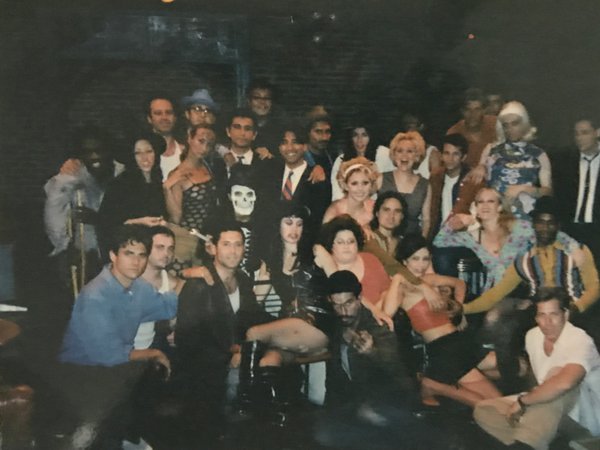
Allen had us commit to a rehearsal schedule that felt designed by someone who had done extreme military training: Monday through Friday, 5 AM to 9 AM. Saturdays, 6 AM to 10 AM. We rehearsed Lanford Wilson's Balm in Gilead for over four months. It felt exactly like our propulsion plant drills preparing for Pentagon inspections — a team, working toward something demanding, together.
I arrived early one morning and found Allen dressing the stage by himself. I jumped in and helped. That was the last time he did it alone. I rallied a few cast members, and from then on we showed up early and made it a team effort. Crew morale, Naval Nuclear style, applied to a 99-seat theater in Los Angeles.
We performed 108 sold-out shows — hitting the Actors Equity Association limit for that venue. With every single performance, my understanding of the story and my character deepened. The anxiety I'd braced for in front of a live audience simply never arrived. At some point — I couldn't tell you which show — a thought crystallized and refused to leave:
If I could find a way to make a living doing this, it would be a dream come true.
I'd loved movies and television since I was a kid. And now, somehow, here I was.
A Mentor's Gift, and Three More Years
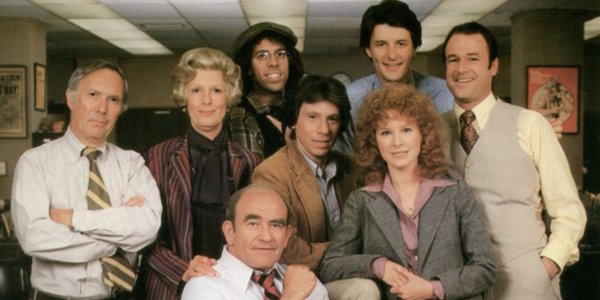
Near the end of our run, I hit a financial rough patch — an unpaid invoice that threatened to pull me out of class. I confided in a cast mate, and somehow word reached Allen. After the next performance, he pulled me aside and asked about my situation. I told him. He said, "Don't make any decisions until I call you tomorrow. Let me see what I can do."
He called the next morning and offered me a position as one of his Stage Managers. Tuition fully covered. I would assist him twice a week while continuing my own class twice a week. For three years, I had the extraordinary privilege of watching Allen teach — observing his genius up close, applying his lessons in my own work, and helping create an environment where other actors could grow.
I have never witnessed anyone care more generously for their students. It made complete sense: he was a former Marine. A combat veteran. He set off metal detectors at airports from a grenade fragment still in his elbow. He knew what it meant to commit to something bigger than yourself, and he brought that to every single class.
Allen Williams had more impact on my career than anyone else. He pushed me toward this path when I had no headshot, no resume, and no reason to believe I belonged here. He guided me for those three years, encouraging me the way veterans encourage each other — with high expectations, clear feedback, and an unspoken message: we don't quit.
God bless you, Allen. Rest in peace. The gratitude I carry for you is beyond any words I know how to write.
What I Bring to Every Set
Here's the thing about crew morale — it doesn't stay on the ship. It doesn't stay in the theater, either.
Every time I step onto a film or television set, I bring Captain Twardy's lesson with me. A production day is long and demanding, just like a day at sea. People are under pressure. Stakes feel high. And how the people around you feel — whether they feel seen, respected, and genuinely part of something — determines the quality of everything that happens.
So I say hello. Every time. To everyone. Camera operators, PAs, the director, the actor I've never met. I help when something needs doing. I show up early. I make the environment a little better just by being in it — the same way I helped dress that stage at 5 AM, the same way I committed to 200+ hellos a day on a warship in the middle of the Pacific.
This isn't a technique. It's not something I learned in an acting class, though Allen reinforced it beautifully. It's something forged in me by eight years of working in close quarters with brilliant, dedicated, and often exhausted people doing something that genuinely mattered.
If you're a casting director reading this, I want you to know: when you bring me onto a set, you're getting someone who has spent his whole adult life figuring out how to do excellent work and make the people around him feel good about showing up. That's not a coincidence. That's training.
And if you're a fellow actor — welcome. Pull up a chair. This is a tough business, but it's a lot more fun when we take care of each other.
I learned that in a nuclear engine room. I believe it in a scene study class. And I carry it everywhere I go.
If you're reading this and wondering whether your own unconventional path — military, medicine, trades, teaching, whatever it was — translates to something creative: it does. The discipline, the teamwork, the hard-won confidence that comes from being genuinely accountable for something that matters — that's not a liability in this industry. It's a superpower. The people I most admire didn't go straight from drama school to a series regular. They lived first. Share this with someone who took the long road.

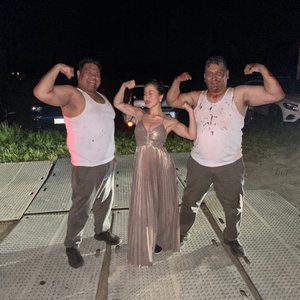
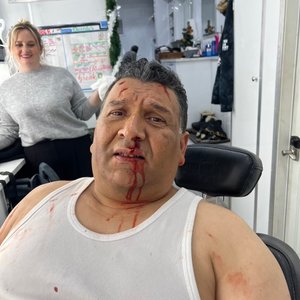
Reacher Season 3
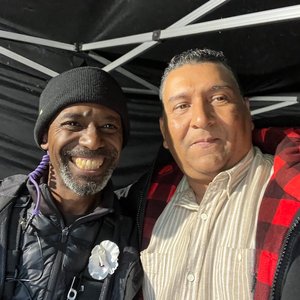
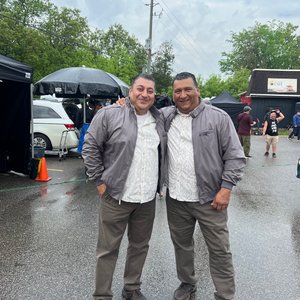
Every day on set, I was reminded of how lucky I am to be doing this work. The cast and crew of Reacher are some of the most talented, kind, and fun people I've ever met. I'm grateful to showrunner Nick Santora to have been part of such a fantastic team, and I can't wait for everyone to see what we created together. Reacher on Amazon Prime Video
Every day on that set was proof that the best crews — whether they're running a nuclear reactor or shooting primetime television — are built on the same foundation: people who show up, do excellent work, and make everyone around them better for being there.