
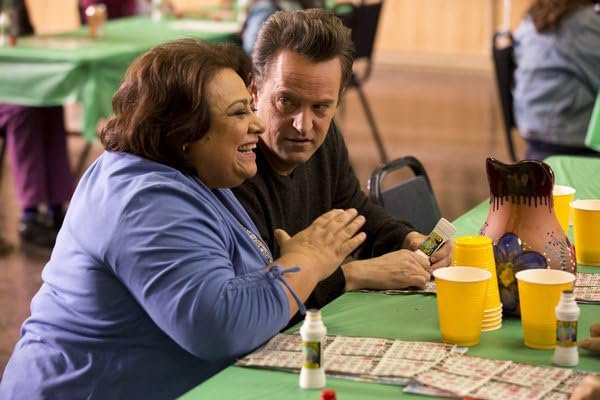
Two Lines, the Pope, and a Series Regular: What Tonita Castro Taught Me About Acting
She had two lines. She was ready to cancel. Then she listened like she was at the Vatican — and Matthew Perry asked the producers to keep her forever. A tribute to Tonita Castro, and a lesson every actor and military veteran needs to hear.

Roberto Montesinos
Why I'm Writing This Today
This past Saturday, June 6th, I was sitting with a fellow veteran — someone thinking seriously about a career in acting — and I started telling them the story of Tonita Castro.
I watched their face as I told it. The moment the Vatican landed. The moment they understood what happened with Matthew Perry. The way their eyes changed when the military parallel clicked into place.
And I thought: every veteran who has ever considered acting would benefit from reading this story. Not eventually. Now.
So here it is.

The Setup: Two Lines and No Hope
At the time, I was a theatrical assistant at a talent agency. Not an acting coach — I want to be honest about that from the start. I had booked about a dozen co-stars myself, but I had no formal coaching credential and no business calling myself an acting teacher.
The lead agent came to me anyway.
He had a client — a Hispanic female actor, enormously talented — who was getting consistent audition appointments for American television and film and booking exactly none of them. She hosted a Spanish-language radio show that was wildly popular and genuinely funny. Anyone who heard her in that medium knew she had it. And she booked a number of Hispanic television commercials, pretty steadily. But put her in an audition room for an American TV role, and something wasn't connecting.
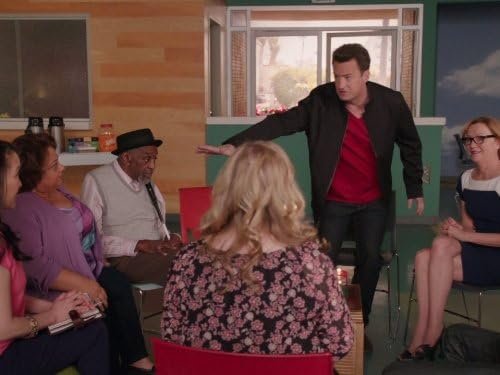
The agent wanted me to coach her for an upcoming appointment. A co-star role on Anger Management — the NBC show starring Matthew Perry of Friends.
I asked for the sides.
Two lines.
I didn't understand why anyone needed coaching for two lines. The agent explained: it was his idea, because she was so discouraged. She believed she was going to lose the part to someone more established, more famous, someone with more credits. She had already told him this would probably be another waste of time because of the large number that she didn't book against more established acting careers.
Her name was Tonita Castro. Tonita Castro on IMDb
She was wonderful in person — warm, expressive, clearly gifted. But she walked into that session carrying something I recognized immediately: the weight of someone who has been invited to compete but no longer believes she's allowed to win. I have been there, especially when I was younger and a rookie sailor.
The Coaching Session
I started the way I always start: with questions.
"Why is this woman a member of the anger management group?"
Tonita didn't know. The script didn't lay it out.
"Okay. Why do you think she is?"
Still didn't know.
"What makes you angry?"
She paused — and then gave me the safe answer. Traffic. The price of gasoline. Rent going up every year. Real things, yes. But nothing personal. Nothing that lived in her body.
I waited.
"What about what you said earlier — about being invited to audition but never being invited to set?"
Her face changed.
That was it. The thing actually living inside her. She had been carrying this truth politely for years: I get the call, but I never get the contract. I get the room, but never the role. That specific frustration — that particular shape of being overlooked in spite of your talent — was exactly what her character was feeling too. The character was angry about something she couldn't control. So was Tonita.
She mentioned canceling the audition.
"You seem angry," I told her. "Good. Make a note of why. We'll come back to it."

The Church
Before we ran the scene, I had her listen to Matthew Perry's character delivering his monologue — a long, sharp, honest speech to the anger management group. The writing was excellent. The character was perceptive and merciless and real.
As I read it out loud, I noticed Tonita's eyes drifting to the script. She was waiting for her cue. And when she finally spoke, her words felt disconnected — like she was reciting rather than responding. She wasn't being affected by what her scene partner was saying. She was simply waiting for her turn.
This is the most common trap in acting that I have ever been guilty of. The lines are only half the job. The harder half — the half that actually books the role — is what you do between them. It's what happens to you throughout.
Tonita had the feeling. I needed to find where it lived.
"Have you ever really listened to someone speaking in front of an audience?" I asked.
We went back and forth a little.
"Sometimes," she said. "At church."
"Tell me about it."
We spent a few minutes there. She opened up — about what it felt like to sit in a pew and hear a priest speak directly to something you'd been carrying all week. How the words could land in your chest rather than just your ears. How the room changed when everyone was truly present together.
I asked her to run the scene again. This time: she was at church. Matthew Perry's character was the priest.
The improvement was immediate. Her eyes stopped dropping to the page. She started listening.

The Vatican
"That was much better," I told her. And it genuinely was. "Now we run it one more time. But remember — this is a comedy, not a documentary. We need to find the size."
I suggested a slight adjustment to her imaginary circumstances.
Not just church. The Vatican.
Not just a priest. The Pope.
And the Pope — entirely by coincidence — was Matthew Perry.
She laughed. I waited for the laugh to settle into something real.
"Take your time. You've been invited to the Vatican. You are sitting in front of the Pope in a crowded room. How do you listen?"
She ran the scene.
Something clicked. Every sentence Matthew Perry's character spoke landed on her. She was affected, surprised, moved, even quietly amused — all without losing her attention for a single beat. The comedy of the circumstances elevated her listening without forcing it. She wasn't performing attentiveness. She was simply present in a room that mattered enormously.
Tonita found real behavior in that room. With two lines of dialogue and a Pope from New York.
What Matthew Perry Said
Tonita booked the part.
One episode. Two lines. A co-star role she had nearly canceled the audition for.
And here is what happened on set.
Matthew Perry noticed.
He told the producers he loved having Tonita's character in the room during his monologues. For actors who carry long, exposed speeches — the kind of writing that requires the room to be alive around you — a great listener is the most valuable scene partner in the world. Tonita gave him that gift without saying a word.
The producers brought her back for a second episode.
Before the second episode aired, she was offered a recurring role — at ten times her original per-episode rate. The show didn't want to lose what Tonita brought to those monologues. Neither did Matthew Perry.

Series Regular: Dads
By the time Anger Management had run its course, Tonita had appeared in thirteen episodes. And then Dads on Fox came calling with a Series Regular contract: twenty-two episodes.
Two lines. One afternoon. One shift in how she was listening.
She offered me some money to say thank you. I told her that I didn't charge actors money for rehearsing. She brought me a burrito anyway. That was Tonita.
Being Instead of Pretending
Here is the principle underneath all of this, and it is the one I return to constantly:
Being instead of Pretending.
Tonita didn't book because I gave her a technique. She booked because she connected her real life to her character's life. The anger was already in her — she just needed self-awareness and to turn a negative into a positive. The church was already in her — she just needed to bring it into the room. She didn't pretend to listen to Matthew Perry. She listened to him. She didn't pretend to be affected. She was affected by him.
This is the difference between a performance that works and one that doesn't, and it cannot be manufactured. Casting directors feel it. Scene partners feel it. And Matthew Perry — one of the most gifted comedy performers of his generation, a man who had played the same kind of long, exposed scene hundreds of times — responded to it deeply enough to change a career.
The personalization of the work. The feeling of the language. The life outlined in the screenplay, made real by the life already inside the actor.
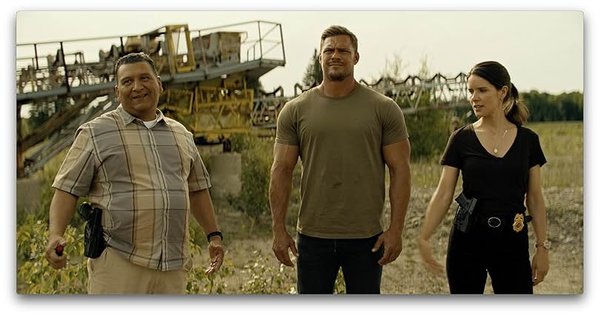
What Veterans Already Know
This is the part I wanted to tell my fellow veteran on June 6th — the part that made their eyes change.
Every single day in uniform, you were doing this.
Not performing. Being. Your character wasn't fixed; it shifted depending on where you were, who was in the room, and what the circumstances required. In front of your Commanding Officer, you were one version of yourself. In front of a subordinate, another. With your crew at the end of a long deployment, another still — relaxed and at ease, trying to find the joke in a hard situation. Transfer to another vessel for official business, surrounded by strangers in uniform, and you became someone different again. Same history. Same uniform. Different character.
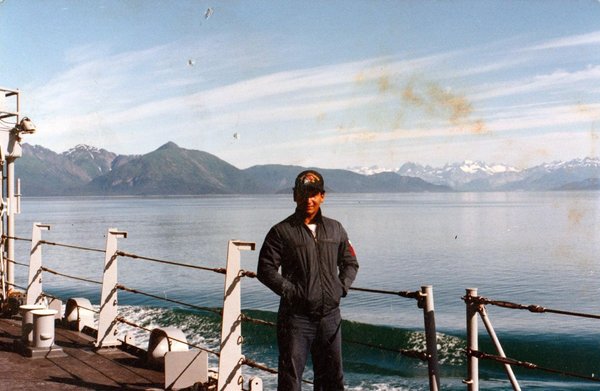
I served four years on the USS Arkansas (CGN-41) — the Pacific Fleet's nuclear-powered guided missile cruiser that served as the test platform for the new surface-launched Tomahawk missiles. Every time we returned to home port in Alameda after a deployment, the Reactor Laboratory Division transferred special items from the nuclear plants to a naval tender, the USS Samuel Gompers.
At sea with my shipmates, I was one person. Boarding the Gompers with official documents and a different ship's company around me, I was someone else entirely. Not performed. Not constructed. Just real — responsive to circumstances, shaped by rank and context and years of shared history.
That is exactly what the acting profession wants: BEING.
The thousands of hours veterans spend in uniform aren't just military experience. They're thousands of hours of character work — of BEING instead of PRETENDING — without ever calling it that.
You walked out of the service already trained for this. Many actors spend a decade trying to find what you already know.
The Questions
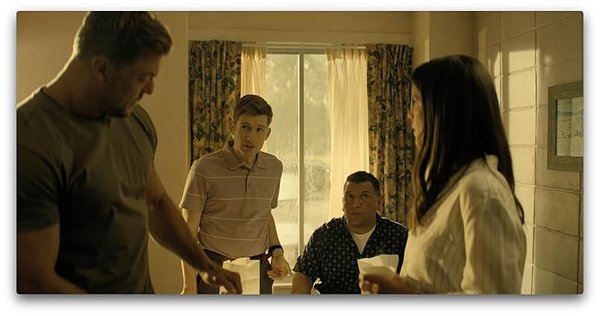
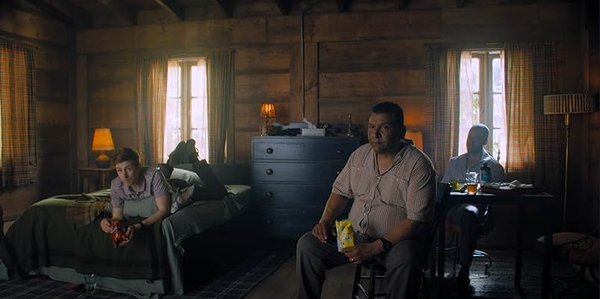
When I'm preparing a role now, I use my military experience the way Tonita used her church. I personalize. I personify. I become. And working on Reacher I found myself inspired to become more.
I'm working on an audition for a prison warden. As I run the lines to memorize them, I ask myself after each pass:
How would my Commanding Officer handle this conversation?
How would the Chief Engineer?
How about my Division Chief Petty Officer?
And those questions open others: What would I be like as the CO? How would I hold myself as the Chief Engineer? What does the Chief Petty Officer's version of authority feel like from the inside?
Different histories. Different bodies. Different ways of carrying authority. Each one a fully realized character drawn from life I've actually lived — not imagined or researched or performed. Known.
I'll close this section with something Sean Penn once said (paraphrasing), and it connects directly to everything above:
"Good acting comes from good questions. Great acting comes from hundreds of questions."
The questions I asked Tonita Castro that afternoon weren't coaching tricks. They were a FUN investigation. They were an invitation to bring herself into the room — her real anger, her real faith, her real frustration — and let the character carry it.
She did. And it worked.
An Invitation to Veterans
I am a member of Veterans in Media & Entertainment (VME), and I have spoken to their president about something I want to do:
Teach. More accurately, to share what I have learned from great teachers including Broadway director Milton Katselas and former Marine and television star Allen Williams.
No charge. No credential required from me except the experience of having done it — as an actor, as a veteran, and as the person who sat across from Tonita Castro on that afternoon.
If you are a veteran who has ever thought about acting — seriously or just in the back of your mind — I would love to have this conversation with you. I believe the work you did in uniform has prepared you more thoroughly than you know. I'd like to help you see that.
If there is enough interest, we may be able to organize a Zoom Q&A through VME where we can work through exactly this kind of session together. I'll announce it here and through VME when it comes together.
If this post resonated with you: share it with a veteran. That's the whole ask.
Tonita Castro
Before I finish, I need to say something directly.
Tonita Castro was a gifted, joyful, genuinely funny human being who gave everything she had to her work and to the people around her. What happened in that coaching session wasn't me teaching her something she didn't know. It was her giving herself permission to bring what she already had into the room — and then doing it with total commitment.
The career that followed was hers. The talent was always hers.
I got a burrito.
She got the career she deserved.
Tonita Castro — rest in peace, and thank you for bringing laughter and joy for so many years to so many people around the world.
#VeteransInMedia #VME #ActingAdvice #MilitaryToActing #ToniCastro #AngerManagement #MatthewPerry #BeingInsteadOfPretending #SeanPenn #ActorLife #USNavy #Veterans